Wednesday, December 12, 2007

Hold Your Breath, Count To Ten, Don't Completely Freak

It's Wednesday. The first three days of this week have been radioactive-hot with tension, fights, disappointments, and explosions. This new group of students I'm working with is not just rough around the edges -- it's all edges.

Actually, there's a core of good students underneath it all but the outer layer of thugs and (yes) idiots is obscuring those good ones. It's really frustrating to have to tell the same students the same things over and over and over again. Please stop yelling. Don't use those words. We're not talking about that right now. Please do your work. Shut up before I have to bodily throw your obnoxious, foul-mouthed, just-here-to-get-your-grandma-off-your-back self out of this second floor window.

You know, the usual teacher basics.

Anyway, the real source of my frustration today is my boss. Both bosses actually. It's one thing to have to struggle with the students when you have wise, competent employers who are attentive to the needs of the organization, who set a good example for others to follow, who demonstrate a grasp of what's required to do the work. But when you have to struggle with willfully, forcefully, aggressively ignorant students and have to contend with bosses who aren't here half the time, who do a poor job when they are here, and who constantly contradict themselves, each other, and the rest of the staff, it feels a little like you're on a small boat in big water and there's no dry land around for miles.

Sigh.

So that's where I am -- small boat, no dry land. I don't want to complain because just having a job in Detroit is a blessing. A job with benefits and a fair amount of flexibility is even more so. There are a lot of good things about working here. It's just that today, the students and the bosses aren't among those good things.

The thing I have to keep telling myself is that this job is not forever. I will not be here forever. This is not the best or last teaching job I will ever have. It will be fine. It will be fine. It will be fine.

For now I'm just going to sit here quietly and meditate and think of happier things.

Friday, December 7, 2007

The Golden Compass and Richard Dutcher: Some Thoughts

There has been hubbub around the release of The Golden Compass, the first film in a projected trilogy based on the His Dark Materials books by Philip Pullman. It seems Mr. Pullman is an avowed atheist and his books, reportedly, are an allegory about discovering that religion and God are essentially hoaxes. I haven't read the books so I can't really say one way or the other. I've read some pretty convincing arguments on both sides -- some saying the books encourage independent thought, curiosity, wonder, kindness, patience, etc. and others saying that a book by an atheist simply can't be faith affirming. All the talk has piqued my curiosity and the trailer of the film looks like a million bucks. Reviews generally have been mixed-to-poor. The best review tagline I've read so far said, "Compass Disappoints Fans and Censors," meaning it was neither here nor there enough to satisfy anyone.

Anyway, because the people on the Association for Mormon Letters discussion board are people who are interested in religion and books and movies, it's sparked some discussion there as well. Recently, I posted some quotes from Philip Pullman that I thought were interesting and another writer, Thom Duncan who is a playwright, responded and brought up Richard Dutcher, the director of God's Army, Brigham City, and States of Grace. The following is some of what was written:

"There's an brief, interesting article on Time magazine's online version today about Philip Pullman. Here are a couple of excerpts:

'I suppose if you are interested in religious questions, that makes you religious," Pullman muses. 'I am. What I am not is a believer in the sorts of gods that seem to be on offer from the various major religions.'

Pullman sees himself as championing the universal human values of love and tolerance and curiosity, many of which are of course also embraced by Christianity, though not always, he argues, by Christian writers.
...
Atheism has had a best-selling moment of late with the success of books by Richard Dawkins and Christopher Hitchens, and Pullman runs the grave and improbable risk of becoming not just mainstream but fashionable. But he isn't a creature of fashion any more than he's a creature of Satan. 'I'm a great admirer of both men,' he says, 'but I wouldn't want to be part of any movement that had an agenda. I'm not arguing a case. I'm not preaching a sermon. I'm not giving a lecture. I'm telling a story. Any position I take is that of a storyteller who says, Once upon a time, this happened.'"
....

Thom Duncan: "'I'm telling a story. Any position I take is that of a storyteller who says, Once upon a time, this happened.'

Richard Dutcher should memorize Pullman's comment. In fact, I think he may have said something similar at one time or another.

Despite the clarity of this position, some LDS continue to be bothered by such superflous things as Dutcher's missionaries flouting the rules. Poetic license is someting that some people don't seem willing to grant to Mormon Artists. I wish I knew why. Current scholarship shows us that not all the history in the Bible is accurate, there are questions about the time line, and the literary allusions abound, and the official understanding of the Book of Mormons geography has changed in recent decades from a pan-American Nephite civilization to a localized group of people in Mezo-America. Yet none of that affects our appreciation, undestanding, and belief of the sriptures as valid moral guides. Why do we then, become so exercised when an LDS artist uses similar techniques to tell his/her story."

My response: "Good questions. Thom. I think a lot of it has to do with what I think of as the Paul H. Dunn Effect. We come from such an odd, obscure, unlikely history (boy sees God, gets plates made of gold, translates new scripture, men have dozens of wives, etc.) that I think Mormons as a people have long been hungry for mainstream acceptance and have long shunned anything that makes us seem shaky, shifty, weird, or less than firmly established as 100% true all the time.

I think the whole Paul H. Dunn thing had a lot to do with why The Friend will only accept stories 'based on actual events.' He wounded the institution's public persona of always telling the truth all the time, of always being factual despite the unlikelihood of the claim.

As members of the church we are taught early on that everything we do, say, and think is an extension of/representation of our membership in the church. We're taught to always set the best example because we never know who is watching. We are encouraged to avoid the appearance of evil, etc.

This combines with the fact that the church has always produced paintings, theater, literature, and film but has never produced art for art's sake. Many of the images, sounds, and stories members are exposed to early on are didactic in nature. I think this creates a powerful feeling in most mainstream members that tells them that any artistic creation they may make or consume should not only represent but actively promote the values, teaching, and doctrine of the church.

In other words, I think the whole 'I'm a member of the church first and a (fill in the blank with artist, writer, painter, plumber, etc.) second' is why many LDS people can't get past a Mormon artist who creates things that don't fit into the comfortable, easy to define world of didacticism. For many, you can't be just a storyteller if you're Mormon. You will always be a Mormon who tells stories and, as such, you have a responsibility to tell stories and tell them in a way that are in keeping with the greater knowledge and light that you have.

I think the problem comes in when an artist makes something that he/she feels is completely in keeping with that greater light and knowledge but the consumer doesn't see it. The (to my mind) ridiculous comments that were made about Dutcher's States of Grace along the lines of 'Who would want to go see a film about a missionary having sex with a porn star?!!' fall in this category. The film was about grace and redemption for everyone, particularly for the most flawed of sinners and that was the message. But because it showed a missionary falling to temptation and then symbolically suggesting his acceptance and redemption through Christ RATHER THAN depicting some narrow escape from the clutches of evil, some saw it as not in keeping with what we are taught in the 13th Article of Faith.

(I feel like I'm doing an awful lot of stumping for people whose POV I don't agree with.)

Anyway, a lot of it just comes down to taste and tolerance for complexity and darkness. For me, I need darkness in order for the light to have real meaning. Elder Farrell's fall in States of Grace reminds me of what a sinner I am and of how dependent on and grateful for Christ I am and need to be. If he had just avoided Holly and not given in, I would have thought, "Good for him" but there would have been no ending to the movie. States of Grace doesn't encourage us to sin. Rather, it suggested there was hope for when we do -- which we all do and always will.

But, back to the original point of this post, depicting a character who had a history in adult films and, worse yet, having that character sleep with a missionary doesn't fit in with some people's view of what a Mormon storyteller should do. Because he/she should know better (according to them).

This, of course, reminds me of my old saw about why Mormons will flock to see amoral trash produced by people who have nothing to do with their lives, beliefs, or cultural heritage but will stay away from God's Army because there are Priesthood blessings given on screen and a missionary sitting on the can.

But that's a post for another day."

Thursday, December 6, 2007

Winter Light


Tuesday, December 4, 2007

All I Want For Christmas. . .

A good messenger bag to replace my old one. My mom's repair job prolonged its life by another year probably but it is now about to give up the ghost. It's remarkable that a 15 dollar bag from Old Navy lasted as long as it did. The bag above is neither from Old Navy nor is it only 15 dollars.


A "Made In Detroit" shirt. Not because I was made in Detroit, (I was made in Idaho, thankyewveddymuch!) but because I have some pride in living and working here. Also because I think the design of this shirt rocks.


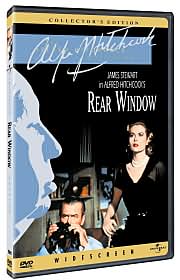
Alfred Hitchcock's Rear Window. Yes, Hitchcock was a genius. Yes, it's a brilliant movie that works on more levels (ha ha) than you can count. Yes, it is a terrific example of set design. Yes, it's an interesting piece of work by Jimmy Stewart as he was trying to darken and diversify his image as an actor. All true. But mostly I'm just madly in love with Grace Kelly. Or Lisa Carol Fremont, I'm not sure which.


A good compass. Because every good Boy Scout should have one.


A Blick 906 Etching Press. Okay, so it costs roughly the same as a small car but only a small car from Yugoslavia. Sure, I could pay half a month's rent with what it would cost to buy this bad boy but if I did have it, I could crank out dozens and dozens of lino prints at a time and wouldn't have to use the back of a steel spoon to make my mark!


Why not?

Monday, December 3, 2007

December is here

About ten years ago, I bought my first issue of Poets and Writer's magazine. I loved it because, in addition to writing about various author's work, the articles included information about where the writers lived, what their houses/offices/workspaces looked like, what kinds of jobs they had before they "made it," and what weird writing rituals they had. When I was in my MFA program, I would sometimes joke that I should have gone into anthropology instead because I was more interested in what writers did, where they did it, and how they did it than I was in reading anything they wrote. So PW fed that appetite for details that exist beyond the official text.

Additionally, there were pages and pages in the back of ads for journals, magazines, and anthologies looking for poems. I highlighted dozens of them without knowing a thing about any of the publications. I got a box of large manila envelopes and started sending poems out willy-nilly.

Within a month, I'd gotten an acceptance back from a journal called New Zoo Poetry Review and I was thrilled. "Hey," I thought, "this publication thing is easy!" and I secretly sneered at my friends and teachers at school who bemoaned the difficulty of getting published. Yes, I had the writing world by the tail.

Of course, I was just wildly lucky and that's all there was to it. The poem was pretty good, I think, and the journal turned out to be reputable in the way that small, short-lived journals are but the fact is, I was just lucky. I've gotten published in other places since then but a lot of it had to do with people I knew or being involved with the publication myself somehow. Getting a poem in NZPR was one of the only times I blindly sent in work that was read and accepted purely on its own merits. Ah, how early success ruins us!

Anyway, the whole point of this little reminiscence is that the poem in question was called "Nativity" and it was on my mind this weekend as the ladies and I went to the giant creche exhibit hosted by the Ann Arbor ward. Every room of the meetinghouse except for the bathrooms, janitor's closet, and chapel were stuffed with Nativity scenes from every corner of the globe. Some were sublime, some were mundane, but the display itself was really impressive and very worthwhile to visit.

With that show in mind, I thought I'd dig out one of my two complimentary issues of NZPR and reprint "Nativity" here for everyone who hasn't read it. (And that would be just about everybody. Needless to say, the journal didn't exactly have a large readership. More like, the editorial staff, the contributors, and the contributors' mothers.)

Nativity

On my knees in front of our altar-shaped table,
practicing the necessary reverence of fragile things,
I unpack the Nativity:

Mary in frozen worship,
Joseph next to her,
his arms gathering in his new wife,

broken and chipped camels and donkeys,
three bearded men,
one man with a lamb in his arms.

Hard, little, plaster Christ-child comes last,
set in the center of concentric circles
of wise men, shepherds, and sheep.

Outside, the wind moves
like herds of cold beasts
trundling past the door.

The altar-table washes
with the advance and retreat of fire light,
its battle with blue from the window.

Each figure performs
a motionless dance
with its shadow shivering behind it.

The child in the hard cradle
is ruddy dark, with too-blue of eyes.
Passive, unknowing, he reaches up.

In the palm of his barely defined hand,
a shadow gathers and then dissipates,
like faith in a windy heart.

Bundled in brick and stone of my house,
a fire banked and hot in its place,
my family quietly about,

I look at this village of figures,
their serene, permanent faces,
their inflexible and fragile existence.

How alike we are
with this holy family,
its onlookers and animals!

We too dance
with our chipped shadows
cast huge and grotesque behind us.

We too have something
at our center that reaches up and out,
something holy.


So there it is. Normally, I would be loathe to print my own poetry here but it's as close as any of my work comes to seasonal or festive so I thought I'd make an exception.